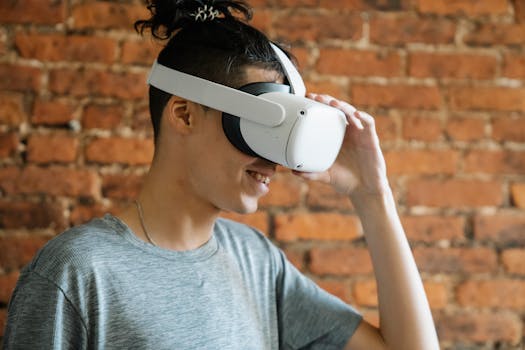
Have you ever dreamed of stepping into a virtual world, only to be yanked back to reality by a tangled mess of wires? For years, that was the hallmark of the VR experience. But what if I told you that the future of immersion is untethered? The rise of virtual reality headsets with wireless capability has fundamentally changed the game, offering a level of freedom and spontaneity that was once the stuff of science fiction.
For enthusiasts and newcomers alike, the prospect of wireless VR can be incredibly alluring. But how does it all work, and what are the real benefits and drawbacks? In this deep dive, we’ll demystify this exciting technology, exploring what makes it tick and helping you understand if it’s the right path for your own virtual adventures.
The Freedom of No Strings Attached: Why Wireless VR Matters
Let’s be blunt: cables are the enemy of immersion. They break the illusion, limit your movement, and can even be a tripping hazard. This is precisely where virtual reality headsets with wireless capability shine. The ability to move freely without being tethered to a PC or console opens up a world of possibilities.
Imagine dodging virtual projectiles with uninhibited grace, physically exploring vast digital landscapes, or even engaging in full-body VR fitness without worrying about snagging a cable. This freedom isn’t just a convenience; it’s a significant upgrade to the overall VR experience. It allows for more natural interactions and a deeper sense of presence within virtual environments. It’s a crucial step towards making VR truly accessible and enjoyable for everyone.
How Does Wireless VR Actually Work?
The magic behind wireless VR isn’t entirely new; it leverages a combination of established and evolving technologies. Primarily, there are two main approaches you’ll encounter when looking at virtual reality headsets with wireless capability:
Standalone VR Headsets: These are the all-in-one marvels. Devices like the Meta Quest line are self-contained, meaning they have their own processor, storage, battery, and display. They don’t require a PC to run. All the processing happens onboard, and they connect to the internet (or other devices) wirelessly for downloads and multiplayer experiences. This is the most straightforward and popular form of wireless VR currently available.
PC VR Headsets with Wireless Adapters/Streaming: For those who want the power of PC VR gaming without the cables, there are solutions. Some headsets come with optional wireless adapters that transmit data from your PC to the headset over a dedicated Wi-Fi connection. Alternatively, technologies like SteamVR’s built-in wireless streaming or third-party software can stream your PC VR games wirelessly to compatible headsets, effectively turning a wired headset into a wireless one. This method requires a robust Wi-Fi network and a powerful gaming PC.
The choice between these largely depends on your existing hardware and the types of experiences you’re aiming for. Standalone is simpler, while PC VR streaming offers potentially higher fidelity graphics.
Decoding the Specs: What to Look For in a Wireless VR Headset
When you’re shopping for virtual reality headsets with wireless capability, a few key specifications will determine your experience. It’s not just about being wireless; performance and comfort are paramount.
Processing Power (for Standalone): If you’re going for a standalone headset, its internal processor is critical. A more powerful chip means smoother performance, better graphics, and the ability to run more demanding applications.
Display Resolution and Refresh Rate: These affect how crisp and fluid your virtual world looks. Higher resolution means sharper images, reducing the “screen door effect” (where you can see the pixels). A higher refresh rate (measured in Hz) makes motion smoother and can significantly reduce motion sickness.
Field of View (FOV): This determines how much of the virtual world you can see at once. A wider FOV enhances immersion, making you feel more “in” the environment.
Tracking Quality: How well does the headset track your head and hand movements? Good inside-out tracking (using cameras on the headset itself) is essential for a responsive and believable experience.
Battery Life: For standalone headsets, this is a major consideration. Most offer 2-3 hours of active use, which might be enough for gaming sessions but can feel limiting for longer explorations.
Comfort and Ergonomics: A headset can be technologically brilliant, but if it’s uncomfortable to wear, you won’t use it. Look for adjustable straps, balanced weight distribution, and breathable face interfaces.
Don’t just chase the highest specs; consider your budget and intended use case. A mid-range standalone headset might be perfect for casual gaming and social VR, while a high-end PC VR streaming setup might be for demanding simulation enthusiasts.
Navigating the Wireless Landscape: Challenges and Considerations
While the allure of wireless VR is strong, it’s important to acknowledge that it’s not without its challenges. Understanding these will help you make a more informed decision.
Latency: This is the delay between your physical movement and its representation in the virtual world. While wireless technology has improved dramatically, some minimal latency can still exist, especially with PC VR streaming if your network isn’t optimized. This can break immersion or even cause discomfort.
Battery Life Limitations (Standalone): As mentioned, standalone headsets have finite battery life. Extended play sessions will require either breaks for charging or investing in portable power banks.
Wi-Fi Dependency (for Streaming): For PC VR streaming, a strong and stable Wi-Fi connection is non-negotiable. Interference, a weak signal, or a congested network can lead to stuttering, dropped frames, and a frustrating experience.
Cost: While standalone headsets have become more affordable, high-end wireless PC VR solutions can still represent a significant investment, especially when factoring in the necessary PC hardware.
It’s also worth noting that while the term “wireless” is used broadly, some standalone headsets still require a physical connection to a PC for initial setup or to sideload content, though this is becoming less common.
The Future is Untethered: What’s Next for Wireless VR?
The trajectory of virtual reality headsets with wireless capability is undeniably upward. We’re seeing continuous advancements in battery technology, wireless transmission protocols, and processing power. Expect to see lighter, more comfortable headsets with even higher resolutions and wider fields of view.
The integration of eye-tracking and foveated rendering (a technique that renders only what you’re looking at in high detail, saving processing power) will further enhance performance and immersion, making wireless VR even more capable. Furthermore, as 5G technology becomes more prevalent, cloud-based VR experiences streamed wirelessly could become a reality, democratizing high-fidelity VR without the need for powerful local hardware.
Wrapping Up: Embrace the Freedom
Virtual reality headsets with wireless capability represent a significant leap forward for immersive technology. They offer unparalleled freedom of movement and a more natural, engaging experience. While there are still technical considerations and limitations to be aware of, the benefits of cutting the cord are substantial.
If you’re looking to dive into VR or upgrade your existing setup, I highly recommend prioritizing wireless options. Do your research, understand your needs, and prepare to be amazed by the untethered worlds waiting for you. The future of VR is here, and it’s wonderfully wireless.