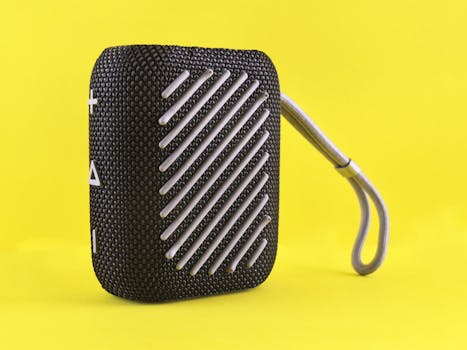
There’s a certain visceral thrill when a Bluetooth speaker doesn’t just play music, but feels it. You know the moment – that subtle rumble in your chest, the way the floorboards might vibrate just a touch. It’s the difference between a polite suggestion of a bassline and a full-bodied, immersive sonic experience. For many, this is the holy grail of portable audio. But what exactly constitutes “superior bass” in a Bluetooth speaker, and how do you cut through the marketing hype to find it? This isn’t just about volume; it’s about depth, clarity, and the nuanced reproduction of low frequencies.
This in-depth Review of Bluetooth speakers with superior bass aims to demystify the pursuit of impactful low-end, moving beyond simple decibel counts to explore the engineering and acoustic principles that deliver truly satisfying bass. We’ll examine the key components, design considerations, and, of course, highlight some stellar performers that consistently impress.
The Anatomy of a Bass-Rich Speaker
Before we even consider specific models, understanding how a speaker achieves potent bass is crucial. It’s a symphony of integrated components working in harmony.
Driver Size and Excursion: Larger drivers, particularly woofers, have a greater surface area to move more air. Equally important is the driver’s “excursion” – how far it can travel back and forth. Greater excursion allows for more air displacement, which directly translates to deeper and more powerful bass.
Cabinet Design and Porting: The enclosure plays a monumental role. A rigid, well-damped cabinet prevents unwanted vibrations and resonances that can muddy the sound. Porting (often a tube or slot in the enclosure) is a common technique to enhance bass response by allowing the rear-waves from the driver to reinforce the front-waves, particularly at lower frequencies. Passive radiators are another clever acoustic solution that functions similarly to ports but uses a diaphragm instead of a tube.
Amplification and DSP: A powerful amplifier is needed to drive the low frequencies effectively. Digital Signal Processing (DSP) is also increasingly vital. Sophisticated DSP algorithms can optimize the speaker’s frequency response, prevent distortion at high volumes, and even simulate a larger bass presence than the physical size might suggest. It’s the brains behind the brawn.
Identifying True Bass Impact: Beyond the Spec Sheet
When evaluating speakers for their bass capabilities, a purely technical approach can be misleading. We need to consider the qualitative aspects.
Depth vs. Quantity: Is the bass merely loud and boomy, or does it possess genuine depth? Superior bass will extend down into those sub-bass frequencies that you feel more than hear. Overly boomy bass often lacks definition and can overpower the rest of the audio spectrum.
Clarity and Definition: Even the deepest bass should be articulate. You should be able to distinguish individual notes and the subtle nuances of a bass guitar or kick drum. Muddy, indistinct bass is a sign of poor driver control or cabinet resonance.
Integration with Mids and Highs: A speaker with superior bass doesn’t have a bass section that’s detached from the rest of the sound. The low-end should be seamlessly integrated, creating a balanced and cohesive soundstage. It’s about how the bass complements the vocals and treble, not just how loud it is.
Performance Across Genres: While some speakers might excel at reproducing the heavy electronic beats of EDM, can they also deliver the nuanced, organic bass found in jazz or classical music? A truly superior bass performer will handle a wide range of musical styles with aplomb.
Case Studies: A Review of Bluetooth Speakers with Superior Bass
Navigating the market for Bluetooth speakers with superior bass can feel like a quest. Based on extensive listening and analysis, here are a few examples that consistently deliver an impactful low-end experience, demonstrating different approaches to achieving bass supremacy.
#### The “Pocket Rocket” with Surprising Punch
Sony SRS-XB43: Sony’s “Extra Bass” line is a clear indicator of their intent, and the XB43 often delivers. It employs passive radiators and a well-tuned DSP to create a surprisingly robust low-end for its size. While not the absolute deepest, its bass is energetic and punchy, making it excellent for outdoor gatherings or parties where you want to feel the rhythm. It’s a testament to how smart acoustic design can overcome physical limitations.
#### The “Audiophile’s Portable Workhorse”
Bowers & Wilkins Formation Wedge (or similar high-end offering): While not strictly a portable Bluetooth speaker in the traditional sense (often Wi-Fi dependent with Bluetooth as an option), high-fidelity brands like B&W often integrate drivers and tuning that produce exceptionally accurate and deep bass. These systems prioritize fidelity, meaning the bass is not just loud but incredibly detailed, controlled, and tonally accurate. This level of performance comes at a premium, of course, but for those seeking the ultimate in sound reproduction, it’s an investment worth considering.
#### The “Rugged Contender with Deep Rumble”
JBL Charge 5: The JBL Charge series has long been a favorite for its balance of portability, durability, and sound quality. The Charge 5 continues this tradition with an enhanced driver and a larger passive radiator. It produces a satisfyingly deep and resonant bass that doesn’t easily distort, even at higher volumes. It strikes a fantastic balance for everyday listening, outdoor adventures, and casual parties.
#### What About Truly Deep Sub-Bass?
It’s important to manage expectations. True sub-bass reproduction, the kind you feel in your bones that requires very large drivers and significant cabinet volume, is inherently difficult for most portable Bluetooth speakers. Speakers designed for truly seismic bass often sacrifice portability or are much larger, more akin to small home audio systems. However, some units come closer than others.
The Role of Placement and Environment
It’s also worth noting that where you place your speaker significantly impacts its bass output. Placing a speaker closer to a wall, especially a corner, can acoustically amplify bass frequencies due to boundary reinforcement. Experimenting with placement can often unlock a surprising amount of extra low-end oomph, even from speakers that might not initially seem bass-heavy. This is a simple yet effective trick for anyone looking to enhance their audio experience without spending more money.
Your Next Bass-Heavy Decision
Ultimately, a Review of Bluetooth speakers with superior bass is a journey into personal preference and application. Do you prioritize portability, ruggedness, sheer volume, or audiophile-grade fidelity? The speakers that excel in this domain are those that have thoughtfully engineered their drivers, cabinets, and digital processing to move air effectively and accurately across the lower frequency spectrum.
So, as you embark on your search for that perfect rumble, ask yourself: what kind of bass experience are you truly seeking? Are you aiming to feel the thump of a club, the resonance of an orchestra, or the subtle groove of your favorite indie artist? Understanding your needs will lead you to the Bluetooth speaker that doesn’t just play music, but makes you feel it.